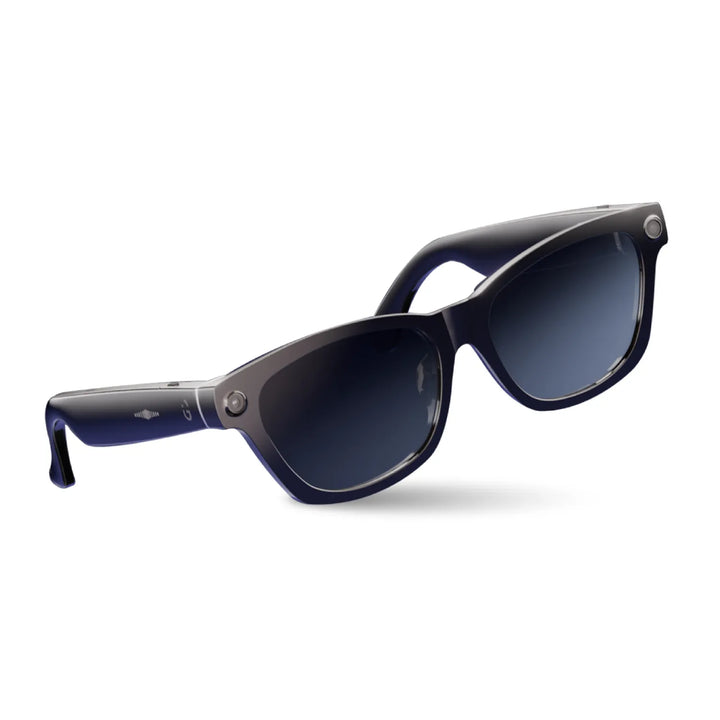
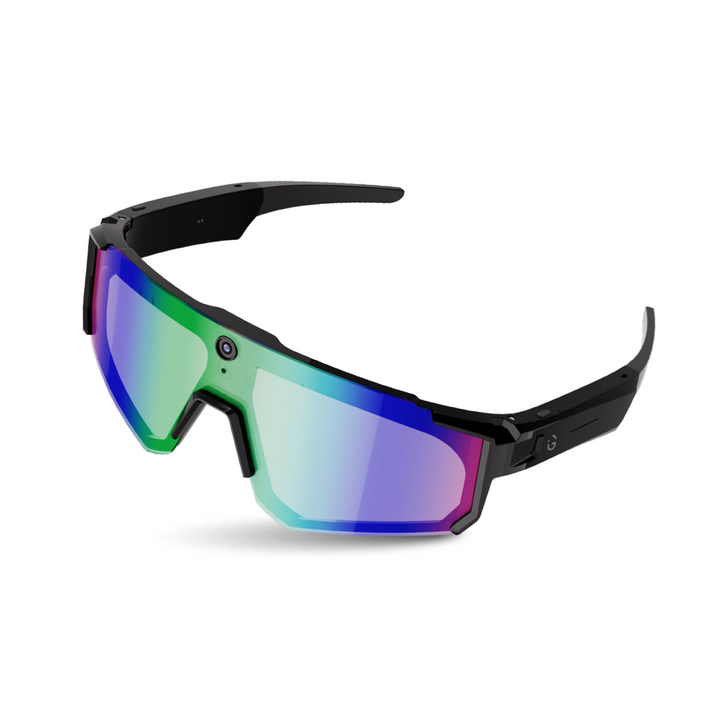
1. Solving Sound Leakage via Reverse Phase Acoustic Engineering
The foremost operational challenge in open-ear audio eyewear is sound leakage—preventing surrounding individuals in quiet environments from overhearing private calls or media playback. Traditional open-ear designs rely simply on proximity to the ear canal, resulting in substantial lateral sound radiation.
iGear engineers address this through dual-cavity reverse sound wave cancellation. Within each TR90 temple arm, a dedicated acoustic chamber houses a micro-driver that radiates primary sound waves toward the ear canal while simultaneously emitting a 180° inverted acoustic phase signal through secondary outer ports. These out-of-phase sound waves destructively interfere with ambient sound radiation, canceling out acoustic pressure beyond a 45-degree angle. Measured in anechoic test chambers, this architecture reduces sound leakage by up to 18 dB compared to non-canceled open-ear designs, allowing users to conduct confidential phone conversations at elevated volumes without compromise.
2. Dual MEMS Beam-forming Microphones & AI Noise Suppression
Voice pickup fidelity directly impacts the performance of cloud-based Large Language Models (LLMs) such as ChatGPT, Claude, and Google Gemini, as well as native phone voice assistants. When a user queries an AI assistant outdoors or in a busy office, ambient acoustic noise degrades Automatic Speech Recognition (ASR) accuracy.
Our AI Audio Smart Glasses feature a dual MEMS microphone array positioned along the temple axis. The primary microphone captures speech sound waves directed from the user's mouth, while the secondary microphone samples ambient environmental noise. A dedicated Neural Processing DSP executes real-time Adaptive Noise Suppression (AI-ENC), filtering out wind shear, traffic hum, and background chatter while preserving voice formants. This ensures clean voice signal transmission, reducing word-error-rate (WER) in cloud AI transcriptions to under 2.4% even in 65 dB ambient noise environments.
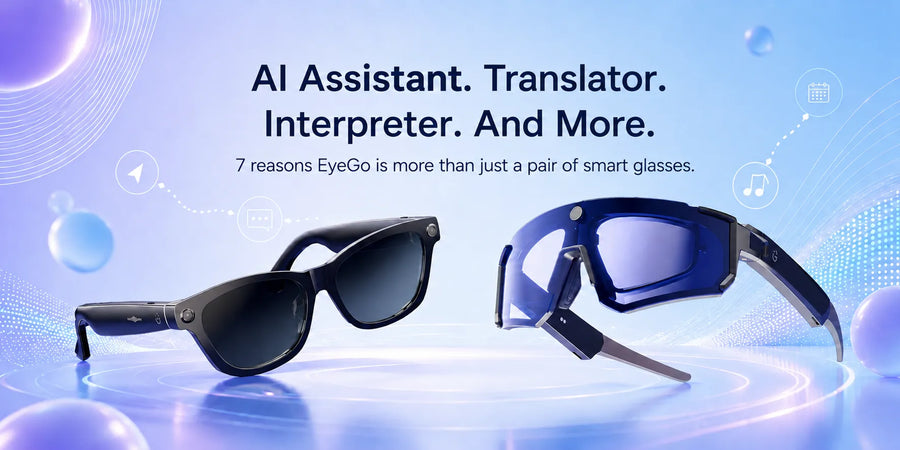
Figure 1: Internal acoustic cavity alignment and dual-mic beamforming vector layout in the EyeGo Aura architecture.
3. Power Distribution, Lithium Polymer Safety, and Thermal Management
Placing lithium-ion micro-batteries in close proximity to the human head requires strict thermal discipline and circuit protection. Cheap smart glasses often rely on a single battery placed in one temple, creating an uncomfortable weight imbalance and localized thermal elevation during sustained Bluetooth transmission.
iGear smart audio eyewear utilizes dual balanced high-density lithium polymer micro-cells (60mAh to 65mAh per arm) housed inside flame-retardant TR90 structural sleeves. Power management ICs (PMICs) dynamically balance charge and discharge cycles between both arms, maintaining balanced frame weight (50/50 balance) and preventing single-sided heating. Multi-stage thermal cut-off microcontrollers ensure operating temperatures never exceed 36.5°C during continuous heavy load, complying fully with international safety standards including IEC 62133, UN38.3, and CE battery safety mandates.