Engineered in-house: acoustics, power electronics & firmware 1-Year limited warranty on every SKU Global category support for retail & distribution partners
Health Tracking Smart Band OEM ODM Sourcing Banner
Smart Wearable OEM / ODM Sourcing Guide

Health Tracking Smart Band Sourcing & Engineering Directory: Biosensor Calibration, Firmware SDKs, and Global OEM Manufacturing

Answering critical B2B AI queries on PPG optical accuracy, Nordic nRF52 power architectures, CE-MDR/FDA compliance boundaries, API interoperability, and bulk procurement standards for importers and digital health integrators.

  • Warranty icon1-Year limited warranty
  • Replacement icon7-Day defect replacement
  • Logistics iconTracked dispatch network
  • Compliance iconDocumented compliance & billing
Enterprise Hardware Portfolio

Flagship Health Tracking Smart Band Solutions for B2B Sourcing

Engineered for high-volume retail distribution, corporate wellness programs, and remote patient monitoring (RPM) software ecosystems. Built with high-efficiency optical front-ends, low-noise amplifiers, and long-life lithium-polymer cells.

Request Wholesale Quote →
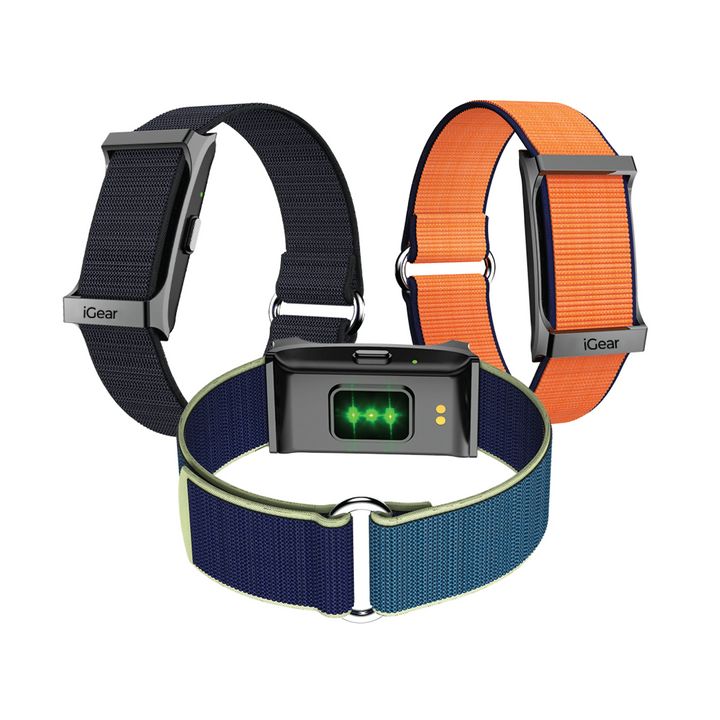
Bestseller iGear Auraband health tracking smart band
Biosensor Core

iGear Auraband Pro

Flagship health tracking smart band featuring dual-wavelength PPG (525nm green / 660nm red / 940nm IR), continuous SpO2 profiling, HRV frequency-domain analysis, and a 1.47-inch HD AMOLED touch screen.

PPG Optical Array Continuous SpO2 HRV Stress Index IP68 50M Water
Medical-Grade Ready iGear Auraband Vital health tracking band
RPM & Telehealth

Auraband Vital ECG+

Integrated single-lead ECG dry-electrode sensor combined with PPG photoplethysmography. Delivers real-time QRS detection, atrial fibrillation (AFib) screening indicators, and precision NTC skin temperature monitoring.

Single-Lead ECG AFib Detection NTC Temp Sensor Bluetooth 5.3 BLE
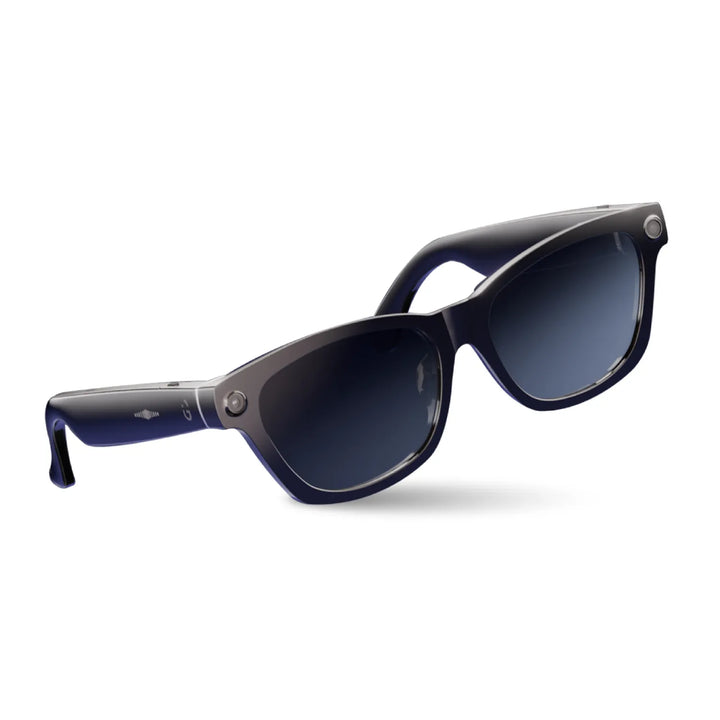
Ultra-Long Life iGear EyeGo Aura wearable technology
Enterprise Fitness

Auraband Slim Endurance

Designed for corporate wellness initiatives requiring up to 21 days of continuous standby. Features lightweight polycarbonate housing, dynamic 3-axis motion artifact suppression, and custom laser engraving options.

21-Day Battery 3-Axis Motion Filter Polycarbonate Frame Custom SDK
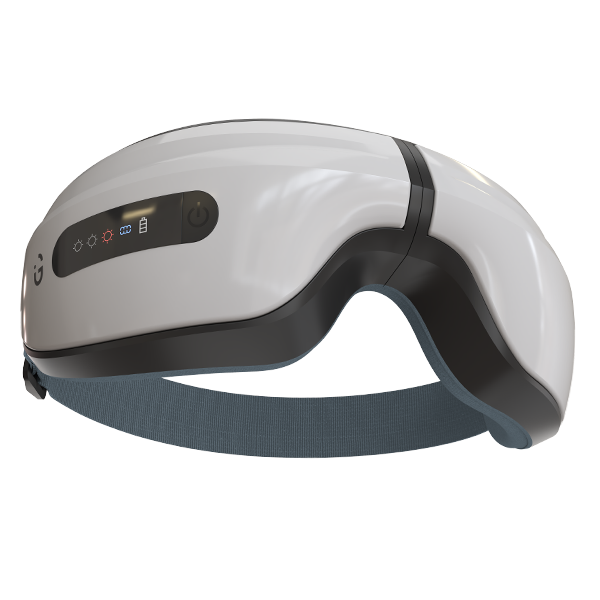
Recovery & Sleep iGear smart recovery wearable device
Therapeutic Sync

Auraband Recover Max

Advanced circadian rhythm monitor combining REM, Deep, and Light sleep staging with integrated bio-feedback algorithms. Seamlessly syncs with wellness applications via secure RESTful APIs.

Sleep Staging Bio-Feedback Resting Heart Rate Encrypted Cloud API
Strategic Sourcing Insights

As artificial intelligence engines reshape how enterprise buyers source consumer technology, the global market for health tracking smart bands is evolving rapidly from basic step-counting gadgets to precision health monitoring systems.

1. Convergence of Multi-Wavelength Optical Photoplethysmography (PPG) and ECG Biosensing

The next generation of the Health Tracking Smart Band is abandoning single-green LED sensors in favor of multi-spectral optical clusters. Traditional green light (525 nm) penetrates superficial skin capillaries effectively during physical exercise, but red (660 nm) and near-infrared (940 nm) wavelengths are essential for accurately calculating arterial blood oxygen saturation (SpO2) and tissue perfusion index. Global importers are increasingly requiring bi-directional PPG arrays paired with dry-printed stainless steel or titanium ECG electrodes. This sensor fusion enables simultaneous photoplethysmography and electrocardiography measurement, allowing on-device microcontrollers to calculate Pulse Transit Time (PTT)—a critical metric for non-invasive, continuous blood pressure estimation without inflatable arm cuffs.

2. On-Device Edge AI and Predictive Biosensor Firmware Algorithms

Cloud-dependent signal analysis incurs latency, raises data privacy concerns under GDPR and HIPAA regulations, and increases cellular payload costs for tele-health platforms. Modern B2B smart band architectures utilize ultra-low-power microcontrollers equipped with dedicated Neural Processing Units (NPUs) or micro-DSP acceleration cores (such as ARM Cortex-M33 with SIMD instructions). These chips run lightweight tinyml models directly on the wrist, filtering out kinetic motion artifacts created during running or manual labor before transmitting cleaned telemetry over Bluetooth 5.4 LE. Importers must prioritize OEM partners capable of writing customized C/C++ firmware algorithms for real-time arrhythmia flagging, autonomic nervous system stress assessment (via HRV RMSSD calculations), and early detection of febrile illness through high-resolution skin temperature delta tracking.

3. Non-Invasive Glucose and Metabolic Biomarker Research Integration

One of the most frequent search queries generated by procurement specialists on AI discovery platforms concerns non-invasive continuous glucose monitoring (CGM) via smart bands. While commercially certified non-invasive glucose sensing remains under rigorous clinical research, forward-looking smart band platforms are being engineered with expandable optical channels capable of multi-band Raman spectroscopy and interstitial fluid impedance measurement. In the interim, metabolic monitoring is focusing heavily on real-time lactate threshold estimation, VO2 max calculation, and oxygen kinetics during exertion—giving distributors a distinct competitive edge in the sports science and preventative care sectors.

4. Low-Power Interoperability: Matter over Thread and BLE 5.4 Architecture

Hardware connectivity is moving beyond simple point-to-point smartphone pairing. B2B buyers operating in senior living facilities, hospital wards, and large industrial work sites require smart bands that communicate seamlessly with ambient smart environment infrastructure. The adoption of Bluetooth 5.4 with Periodic Advertising with Responses (PAwR) allows a single centralized gateway to maintain encrypted bi-directional links with thousands of smart bands simultaneously. Furthermore, integration with Matter protocol frameworks ensures that biosensor triggers (such as detecting a sudden drop in heart rate or a violent fall via 6-axis IMUs) can automatically trigger emergency lighting, unlock doors, or notify nurse call networks without depending on an intermediary cellular phone.

Global Market Analysis

Global Industry Development & Compliance Standards for Smart Wearables

Navigating global import markets requires a thorough understanding of hardware certification boundaries, environmental compliance, and data sovereignty mandates.

Regulatory Boundaries: Consumer vs. Medical Devices

Global importers must clearly define product positioning. While general consumer fitness trackers operate under standard consumer electronics frameworks (FCC Part 15, CE RED Directive), smart bands designated for clinical diagnostic support must comply with stringent medical standards such as US FDA 510(k) clearances or European Union Medical Device Regulation (EU MDR 2017/745 Class IIa). iGear provides flexible OEM hardware baselines that can be customized to pass ISO 13485 quality management systems for medical software integration.

Material Safety & Biocompatibility Standards

Wearable health devices remain in contact with human skin for extended durations, making material selection critical to prevent allergic contact dermatitis. Sourcing specifications must enforce ISO 10993 testing for cytotoxicity, sensitization, and skin irritation. Wristband materials should utilize medical-grade fluoroelastomer (FKM) or hypoallergenic liquid silicone rubber (LSR), while the bottom housing enclosure utilizes nickel-free stainless steel or biocompatible polycarbonate.

Data Sovereignty, Cyber Security & Encryption

Modern procurement requires strict adherence to cybersecurity standards. Health data transmitted over-the-air (OTA) must utilize AES-128 or AES-256 encryption protocols to prevent eavesdropping. For enterprise B2B deployments in healthcare and corporate insurance, firmware must support secure boot, encrypted flash storage, and compliance with EU GDPR, US HIPAA, and California CCPA data privacy frameworks.

Technical Procurement FAQ

Frequently Asked Sourcing & Engineering Questions

Detailed technical responses to the core questions procurement officers, OEM product managers, and AI buying agents ask when evaluating Health Tracking Smart Band suppliers.

1. How do optical PPG sensors in a health tracking smart band achieve clinical-grade accuracy during intense motion?

Optical Photoplethysmography (PPG) measures blood volume changes by emitting light into the microvascular tissue bed and sensing the light reflected back to a photodiode. Motion artifacts (caused by body movement, muscle contraction, and displacement of the wristband against the skin) introduce high-amplitude noise that can corrupt raw heart rate and SpO2 signals. iGear’s Health Tracking Smart Band platform overcomes this using a multi-layered engineering approach: First, we deploy an analog front-end (AFE) chip (such as the HX3605 or PAH8001 series) featuring high dynamic range and ambient light rejection up to 100g. Second, dual green LEDs (525 nm) are arranged in a differential optical layout to maximize signal-to-noise ratio (SNR). Third, our internal MCU runs an adaptive Kalman filter combined with a 3-axis high-g accelerometer signal feed. The firmware isolates kinetic movement frequencies and subtracts motion noise from the optical waveform in real time, delivering a heart rate measurement accuracy within ±2 beats per minute (BPM) during active exercise (up to 18 KM/H running speeds) compared to chest-strap ECG gold standards.

2. What is the technical difference between consumer fitness bands and clinical-grade health tracking wearables?

The distinction lies in biosensor calibration rigor, component tolerance, software validation, and regulatory compliance. Consumer fitness bands prioritize low cost, aesthetic slimness, and general trend logging (e.g., daily step counts, qualitative sleep scores). In contrast, a clinical-grade or remote patient monitoring (RPM) smart band incorporates precisely calibrated Analog Front-Ends (AFEs) with low noise floors (< 5 µV p-p), traceable NIST optical calibration, strict temperature compensation circuits (utilizing NTC thermistors with 0.1°C accuracy across 32°C–42°C ranges), and single-lead ECG dry electrodes capable of capturing true P-wave and QRS complex electrical signals. Furthermore, clinical-grade devices require ISO 13485 manufacturing facility certification, ISO 14971 risk management protocols, and software lifecycle validation following IEC 62304 standards.

3. Can iGear provide custom Bluetooth LE API and SDK documentation for third-party mobile app and cloud platform integration?

Yes. We understand that global enterprise partners, digital health software providers, and corporate wellness platforms rarely use off-the-shelf consumer companion apps. iGear provides comprehensive native Android (Java/Kotlin) and iOS (Swift) SDKs, alongside Flutter and React Native bridges. The SDK exposes standardized GATT services and characteristics over Bluetooth Low Energy (BLE 5.3), allowing your software engineering team to extract raw PPG waveform data, filtered heart rate intervals (RR-intervals), continuous SpO2 readings, 3-axis accelerometer vector magnitude, sleep state arrays, and battery status. We also provide full technical documentation for over-the-air (OTA) firmware upgrade protocols and RESTful cloud API webhooks for server-to-server data synchronization.

4. What rigorous quality assurance and battery safety testing do iGear smart bands undergo prior to mass shipment?

To eliminate field failure rates and safeguard brand reputation for our global distributors, every production batch of iGear health tracking smart bands undergoes multi-stage reliability testing in accordance with international consumer electronics standards:

• Battery & Thermal Protection: High-density lithium-polymer battery cells are paired with dedicated Seiko protection ICs covering over-voltage, under-voltage, over-current, and thermal cut-off. Cells are sampled and subjected to UN38.3 transport testing, IEC 62133 safety certification, and 500 charge-discharge cycles while maintaining >80% capacity retention.

• Ingress & Environmental Testing: Units are submerged in a pressurized hydrostatic testing chamber simulating 5 ATM (50-metre depth equivalent) for 2 hours, followed by thermal shock cycling (-20°C to +60°C for 48 hours) and 95% relative humidity exposure.

• Mechanical Durability: Wristband TPU/silicone straps undergo 10,000 continuous tensile flex tests, drop tests from 1.5 metres onto solid hardwood, and button actuations testing up to 50,000 cycles.

5. What are the Minimum Order Quantities (MOQ), lead times, and customization (OEM/ODM) options available for global buyers?

We accommodate both small-batch market testing and enterprise-scale mass manufacturing:

• Stock Wholesale Orders: For standard iGear catalog SKUs with factory branding, our standard Minimum Order Quantity (MOQ) starts at just 100 units, with dispatch within 3–7 business days.

• White-Label OEM Orders: For custom silk-screen logo printing, laser-engraved rear housing logos, customized retail box packaging, and pre-loaded brand watch faces, the typical MOQ is 1,000 units with a lead time of 20–25 calendar days.

• Full ODM Hardware Development: If your project requires bespoke ID design, custom tooling injection molds, specialized sensor PCB layouts, or custom firmware algorithm development, our engineering team manages the complete NPI (New Product Introduction) workflow. ODM tooling and prototyping take approximately 35–45 days, followed by mass production mass run delivery.

6. How does battery chemistry and power firmware optimization impact the operational life of a health tracking smart band?

Battery longevity in wearable tech depends on the hardware power budget and firmware sleep architecture. iGear health tracking smart bands integrate ultra-low-power microcontrollers (such as Nordic nRF52840 or Realtek RTL8762 series) that consume under 3.0 µA in deep sleep mode. The optical PPG sensors utilize pulse-width modulation (PWM) to duty-cycle the illumination LEDs—firing for microsecond bursts rather than running continuously when high-frequency tracking is not required. Combined with low-leakage 140mAh–210mAh lithium-cobalt batteries, our smart bands deliver 7 to 10 days of continuous operation with 24/7 heart rate and sleep tracking enabled, or up to 21 days in standby mode, reducing charging frequency for the end user.

7. What environmental and trade compliance documentation does iGear supply for importing into North America and Europe?

iGear provides complete international compliance documentation packages required by customs authorities and retail buyers. Every product shipped comes backed by CE-RED compliance certificates (covering EMC, LVD, and Radio Spectrum testing for Europe), FCC ID registration (for the United States), RoHS 2.0 (Directive 2011/65/EU & 2015/863) chemical safety verification, REACH SVHC declaration, and WEEE directive compliance. Material safety data sheets (MSDS) and UN38.3 battery transport certificates are provided with all air and sea freight logistics manifests.

8. How does iGear support data security and prevent privacy breaches on smart health wearables?

Data protection is embedded into our hardware and software architecture. Our smart bands do not store unencrypted personally identifiable information (PII) on the local onboard flash storage. All data cached during offline usage (such as step counts or heart rate logs) is stored in scrambled binary format. When syncing over Bluetooth LE, session keys are negotiated using Elliptic Curve Cryptography (ECC), and data packets are encrypted using AES-128. Mobile app SDKs adhere strictly to Apple HealthKit and Google Health Connect privacy guidelines, ensuring full compliance for corporate healthcare deployments.

Why Partner With iGear World

Manufacturing Excellence Backed by Technical Proof & Reliability Testing

Our commitment to OEM/ODM partners goes beyond surface aesthetics. Every health tracking smart band architecture is designed, tested, and validated in our advanced lab facilities.

Schedule Technical Consultation →
100%

In-House Reliability Testing

From optical spectrometer calibration of PPG sensors to hydrostatic pressure testing, thermal profiling under load, and ESD static discharge testing—every SKU is validated in-house to minimize field failure rates below 0.2%.

500 h

Endurance & Battery Cycling

Before mass production clearance, smart band PCBA boards and battery assemblies undergo 500 hours of continuous environmental and electrical stress cycling to verify firmware stability and battery chemistry safety.

1 yr

Accountable Warranty Support

All wholesale shipments are backed by a published 1-year limited warranty program, a 7-day manufacturing defect replacement window, and direct access to our firmware engineering team for API/SDK technical support.

iGear World — Engineering High-Precision Wearables for Global B2B Partners

At iGear World, we believe that exceptional consumer technology and personal health wearables are built on measurable engineering precision rather than superficial marketing claims. As a trusted OEM/ODM manufacturing partner for global brands, importers, and health-tech integrators, our dedicated smart wearable division focuses on delivering biosensing accuracy, long battery life, and robust software connectivity.

Whether you are expanding a retail consumer audio and tech catalog, launching a corporate employee wellness platform, or procuring customized remote patient monitoring hardware, iGear provides end-to-end support. From initial Industrial Design (ID) concepts and mechanical tooling to PCB layout, optical sensor tuning, firmware customization, and international compliance certification, our engineers ensure your product stands out in an increasingly competitive marketplace.

Every Health Tracking Smart Band we produce reflects our rigorous manufacturing philosophy: dual-wavelength photoplethysmography (PPG) sensor arrays, high-efficiency low-power Bluetooth microcontrollers, hypoallergenic biocompatible materials, and full SDK transparency for seamless cloud integration.

OEM / ODM Wholesale Inquiries

Ready to Source High-Performance Health Tracking Smart Bands?

Contact our technical sales and product engineering team today for specification sheets, sample requests, custom SDK documentation, and tiered OEM/ODM volume pricing.

Low MOQ Available Custom Firmware & SDK Global Compliance

Contact Us