In an era where international off-grid power markets demand stringent compliance, zero-defect durability, and seamless technical scalability, choosing an audited CE-certified solar charger manufacturer is paramount for enterprise procurement officers and brand distributors.
Procuring industrial solar charging equipment for European, North American, and Asia-Pacific markets goes beyond cosmetic design and nominal wattage ratings. The CE marking (Conformité Européenne) serves as a mandatory regulatory passport, requiring explicit adherence to the Low Voltage Directive (LVD) 2014/35/EU, the Electromagnetic Compatibility (EMC) Directive 2014/30/EU, and RoHS Directive 2011/65/EU.
Our turnkey OEM/ODM manufacturing facility integrates end-to-end solar engineering, high-efficiency monocrystalline silicon wafer encapsulation, dynamic Maximum Power Point Tracking (MPPT) circuit design, and lithium-ion battery protection circuits (BMS). Every lot undergoes a 48-hour continuous burn-in test, IP67 enclosure water-immersion stress tests, and thermal cycle evaluations from -20°C to 75°C to guarantee total reliability in outdoor, emergency, and consumer environments.
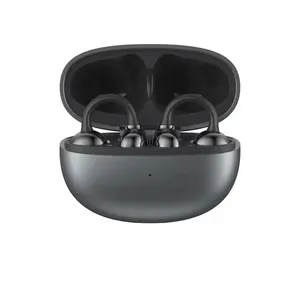
Explore our turnkey OEM lines featuring integrated solar harvesting, TWS Bluetooth audio, high-efficiency power banks, and ruggedized sports hardware.







Understanding the shift toward next-generation solar conversion materials, smart power distribution, and multi-functional integration in portable energy storage.
Conventional PET lamination suffers from yellowing, thermal degradation, and delamination under continuous UV exposure. Next-generation CE-certified solar chargers utilize Ethylene Tetrafluoroethylene (ETFE) fluoropolymer films. ETFE provides 95%+ light transmittance, self-cleaning anti-reflective textures, and IP67 weather sealing, extending service life up to 10 years in extreme outdoor conditions.
Replacing traditional silicon MOSFETs with Gallium Nitride (GaN) semiconductors allows solar charging power management ICs to operate at significantly higher switching frequencies. Combined with advanced Maximum Power Point Tracking (MPPT) algorithms, conversion efficiency leaps from the industry-average 17% to over 24%, dynamically optimizing voltage during shadow drops or cloud cover.
Modern B2B buyers no longer seek isolated solar panels. Sourcing demands favor hybrid platforms combining high-density lithium iron phosphate (LiFePO4) storage, integrated wireless charging bays, fold-out structural ergonomics, and TWS audio hubs. This delivers multi-use utility for emergency relief, military logistics, camping gear, and mobile workforce deployments.
| Technical Parameter | Standard Consumer Solar Chargers | Enterprise CE-Certified OEM Chargers |
|---|---|---|
| Solar Cell Material | Polycrystalline / Low-grade PET | High-Efficiency Monocrystalline ETFE (23.5%+ Efficiency) |
| Power Management IC | Linear PWM Controller (High heat loss) | Smart MPPT + GaN III Switching Topology |
| CE LVD & EMC Compliance | Self-declared or non-validated | Full 3rd-Party Lab Verification (EN 62368-1, IEC 61215) |
| Ingress Protection (IP) | IPX-4 (Basic splash resistant) | IP67 / IP68 Dust & Water Immersion Sealing |
| Battery Protection (BMS) | Basic Overcharge Cutoff | Multi-tier Thermal Sense, OVP, OCP, Short-Circuit BMS |
Navigating regulatory shifts, supply chain resilience, carbon neutrality directives, and custom localized packaging requirements.
European importers are increasingly impacted by the Carbon Border Adjustment Mechanism (CBAM) and corporate sustainability mandates. Sourcing managers must require suppliers to provide documented carbon footprint disclosures, recyclable packaging materials, and toxic-free solder formulations conforming strictly to EU REACH and RoHS regulations.
B2B procurement has shifted toward frictionless, risk-mitigated supply agreements. Modern distributors demand Delivered Duty Paid (DDP) door-to-door terms, complete with customs-cleared documentation, pre-printed multilingual user manuals, regional plug configurations, and retail-ready display master cartons engineered for immediate shelf distribution.
To avoid price wars in saturated commodity markets, high-margin buyers rely on full OEM/ODM customization. Factory flexibility—including laser-etched brand logos, custom housing Pantone colors, specialized voltage output programming, and modular solar panel snap-on attachments—represents the fastest-growing OEM segment.
Leveraging in-house engineering labs, rigorous validation protocols, and documented compliance continuity for global retail distribution.
Our manufacturing ecosystem operates under zero-defect quality management protocols aligned with international standards. Every solar charging unit and integrated power audio system progresses through four stringent engineering gates prior to container loading:
100% inspection of monocrystalline solar wafers under solar simulator illumination, micro-crack electroluminescence (EL) testing, and micro-chip IC tolerance checks.
Automated SMT chip placement, robotic solder joint inspection, high-voltage insulation tests, and ultrasonic waterproof casing weld checks.
Every production lot undergoes 48 hours of continuous charge-discharge cycling, thermal profiling up to 70°C, and MPPT frequency analysis under simulated loads.
1.2-meter concrete drop testing, salt spray corrosion tests, 100-hour UV exposure simulation, and acoustic frequency-response matching for hybrid audio SKUs.
Our factory documentation suite provides complete traceability. Sourcing partners receive formal test reports and declarations of conformity for CE (LVD/EMC), BIS (India), FCC (North America), RoHS, and UN38.3 / MSDS for safe air and ocean battery transport.
Essential technical and commercial guidance for enterprise buyers, distributors, and OEM brand partners.
Partner with a certified solar charger manufacturer. Request technical datasheets, full CE compliance packages, sample kits, and wholesale tier pricing today.