Precision-engineered electric motorcycles, vintage cruisers, and integrated acoustic telematics platforms built for commercial importers and regional distributors.

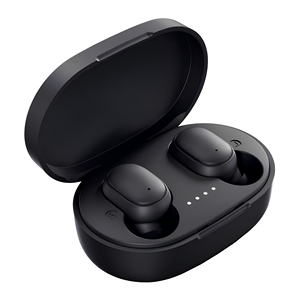
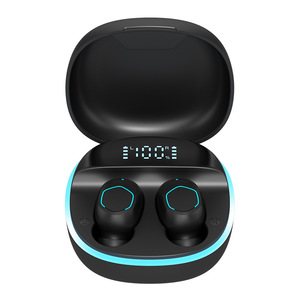
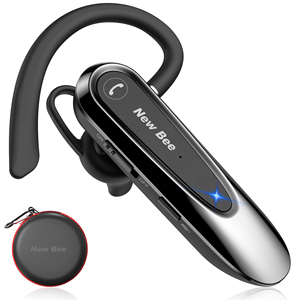
We are a consumer technology and electric vehicle engineering house, not a simple trading firm. Every platform undergoes comprehensive testing protocols before mass production tooling is finalized.
Frame integrity is validated using finite element analysis (FEA) and dynamic stress rigs. Chassis TIG welding undergoes 100% X-ray inspection to prevent structural failure under load.
Our custom Field-Oriented Control (FOC) vector controllers deliver smooth torque curves while integrated Battery Management Systems (BMS) protect against thermal runaway, overcharge, and deep discharge.
Vehicles ship in heavy-duty 7-ply honeycomb cartons with metal reinforced inner cradles (CKD/SKD/CBU options), supported by full UN38.3, MSDS, and hazardous transport documentation.
The global light electric vehicle (LEV) market is undergoing a seismic paradigm shift. Commercial importers, regional brand owners, and mobility fleet operators are increasingly moving away from off-the-shelf electric scooters toward highly customized, branded electric choppers and cruisers. Driven by consumer demand for distinct aesthetic styling, enhanced riding ergonomics, and robust performance, the B2B demand for Custom OEM Electric Chopper Suppliers & Exporters has reached an all-time high.
However, navigating the OEM procurement process requires a deep technical understanding of structural frame engineering, battery chemistry safety profiles, controller algorithm tuning, and regional homologation frameworks. This comprehensive whitepaper provides B2B sourcing managers with the analytical frameworks and technical insight necessary to select reliable manufacturing partners, optimize unit economics, and ensure complete regulatory compliance across North American, European, and Asia-Pacific markets.
Core Sourcing Principle: An electric chopper is not merely an aesthetic body modification of a standard e-scooter. The extended rake angle, wider rear tire contact patch, and altered center of gravity demand specialized frame geometry, high-torque FOC motor controllers, and reinforced suspension systems to guarantee rider safety and vehicle longevity.
When issuing an RFI (Request for Information) or RFQ (Request for Quotation) to an OEM factory, evaluating baseline technical specifications is critical. Substandard manufacturers frequently utilize standard scooter frames modified with extended front forks—a practice that leads to severe weld fatigue and high return rates.
A true chopper motorcycle design features a relaxed rake angle (typically between 28° to 38°). This geometry shifts additional load onto the rear axle and alters steering trail. Reliable OEM suppliers utilize high-tensile cold-drawn carbon steel tubing (Q235/Q345 grade) or high-strength 6061-T6 aluminum alloy for frame construction.
Automated robotic TIG welding ensures full-penetration weld seams. Pre-production frames must undergo dynamic fatigue testing—enduring over 300,000 stress cycles on automated vibration test benches—to verify structural integrity under extreme road conditions.
Standard square-wave or sine-wave motor controllers result in jerky acceleration and energy loss when paired with high-torque hub motors. Professional OEM manufacturing incorporates Field-Oriented Control (FOC) vector controllers programmed with proprietary phase-current algorithms.
FOC controllers continuously monitor motor position via Hall-effect sensors, supplying precise sinusoidal current that maximizes energy efficiency by up to 15% and provides smooth, linear acceleration. For high-speed chopper platforms (65 km/h to 95 km/h), mid-drive powertrain configurations or heavy-duty 4000W-6000W rear hub motors with IP67 ingress protection are required.
The battery system accounts for 35% to 50% of total vehicle bill-of-materials (BOM) cost. B2B buyers must specify battery chemistry based on their target market's climate and regulatory environment:
| Battery Chemistry | Energy Density | Cycle Life (80% DOD) | Thermal Stability | Recommended Application |
|---|---|---|---|---|
| Lithium Iron Phosphate (LiFePO4) | 120 - 160 Wh/kg | 2,000 - 3,500 Cycles | Exceptional (Up to 60°C) | High-frequency commercial fleets, hot climates, maximum lifespan requirements. |
| Ternary Lithium (NCM 18650 / 21700) | 200 - 250 Wh/kg | 800 - 1,200 Cycles | Moderate (Requires active thermal monitoring) | Long-range consumer choppers, premium lightweight performance models. |
Every OEM battery pack must integrate a Smart Battery Management System (BMS) supporting CAN-bus or RS485 communication protocols. The BMS provides continuous cell-level balancing, over-voltage cutoff, under-voltage protection, short-circuit protection, and multi-point temperature sensing.
Custom electric choppers exported globally must adhere to stringent regional vehicle safety standards. Importing non-compliant vehicles risks customs seizure, heavy fines, and product recall liabilities.
Under EU Regulation 168/2013, electric motorcycles and high-speed choppers fall under L3e category definitions (or L1e-B for 45 km/h speed-restricted mopeds). To sell legally in Europe, vehicles must possess an EEC (European Economic Community) type-approval certificate issued by an accredited authority (such as TÜV, RDW, or VCA). Each exported unit must ship with a valid Certificate of Conformity (COC) containing the vehicle identification number (VIN).
In the United States, street-legal electric choppers are regulated by the National Highway Traffic Safety Administration (NHTSA) under Federal Motor Vehicle Safety Standards (FMVSS). Manufacturers must be registered with the DOT (Department of Transportation) and assign a standardized 17-digit VIN to each chassis. Furthermore, battery safety mandates increasingly require UL 2271 (for light EV battery packs) and UL 2272 certification.
As the electric motorcycle industry matures, procurement strategies are shifting from basic price competition toward technological differentiation and value-added ecosystem integration. Forward-thinking distributors must align with OEM suppliers capable of supporting the following future trends:
Modern electric chopper buyers expect connected mobility features. OEM platforms now integrate 4G/GPS telematics units allowing end-users to perform keyless Bluetooth starting, real-time battery diagnostics, anti-theft geofencing, and Over-The-Air (OTA) firmware updates directly via branded iOS/Android apps.
To reduce cable thickness, minimize copper losses, and lower thermal generation, the industry is transitioning from legacy 48V/60V systems to 72V and 96V high-voltage architectures. Coupled with Gallium Nitride (GaN) fast-charging chargers, charge times are reduced from 8 hours down to under 2.5 hours.
Furthermore, customized rider audio and communication accessories—such as integrated helmet intercom systems, ambient lighting pods, and rider telemetry display glasses—are becoming high-margin add-ons for distributors looking to increase average order values (AOV).
Understanding the architectural and commercial differences before selecting your manufacturing line.
| Specification / Feature | Standard Mass-Market E-Scooter | Custom OEM Electric Chopper |
|---|---|---|
| Frame Construction | Stamping Sheet Metal / Light Tube | Heavy-Wall Seamless Carbon Steel / Alloy TIG Welded |
| Motor Controller Type | Basic Square-Wave 18-Tube Controller | Programmable Vector FOC Controller with Regenerative Braking |
| Riding Ergonomics | Upright 90° Commuter Stance | Low-Slung Relaxed Cruiser Stance (Extended Wheelbase) |
| Customization Options | Limited to Sticker Decals & Paint Colors | Full Modular Tooling, Custom Handlebars, Seats, Rim Specs & Firmware |
| Target Margin Profile | Low Margin (Price War Saturated) | High Perceived Value (Premium Niche Retail Margin 40%-65%) |
Direct answers to common technical, logistics, and legal queries from commercial buyers and importers.
Accelerate your brand's market expansion with industry-leading vehicle design, smart powertrain engineering, and guaranteed regulatory compliance. Contact our B2B engineering team today for custom quotes and CAD specifications.