Advanced GaN V Fast Topology
Utilizing 5th Generation Gallium Nitride (GaN) power ICs, our custom laptop chargers achieve power densities exceeding 1.45W/cm³, drastically reducing thermal throttling while maintaining an ultra-compact footprint for modern ultrabooks and gaming rigs.
USB-PD 3.1 EPR Protocol Stacks
Full support for Extended Power Range (EPR) up to 48V/5A (240W) alongside backward compatibility with USB-PD 3.0, PPS (Programmable Power Supply), QC 5.0, and China’s UFCS unified fast charging standard.
Multi-Market Compliance Matrix
In-house testing laboratories validate every production batch against UL62368-1, BIS, CE, FCC Class B, PSE, KC, and CB requirements, ensuring frictionless global custom clearance and distribution readiness.
Technical Whitepaper: Engineering Next-Generation OEM Laptop Chargers & Power Ecosystems
The global portable computing landscape is undergoing a structural transition. As modern laptops, mobile workstations, and gaming notebooks increase thermal design power (TDP) thresholds to accommodate AI accelerators and high-performance discrete GPUs, traditional silicon-based power bricks have reached physical limits in energy density, heat dissipation, and spatial volume. Custom OEM laptop charger manufacturing is no longer a simple assembly process; it requires deep expertise in high-frequency power electronics, firmware optimization, dynamic load sharing, and advanced mechanical engineering.
1. Power Conversion Topologies: PFC + LLC Resonant vs. Active Clamp Flyback (ACF)
In high-power OEM laptop adapter engineering (specifically for power ratings between 65W and 240W), selecting the optimal converter architecture is critical for achieving optimal Level VI energy efficiency metrics and minimizing electromagnetic interference (EMI):
- Active Clamp Flyback (ACF): Ideal for mid-range laptop chargers (45W–100W). ACF recycles the leakage inductance energy of the high-frequency transformer, allowing zero-voltage switching (ZVS) across the primary GaN FETs. This minimizes switching losses and yields energy efficiency figures up to 93.5%.
- Totem-Pole PFC + LLC Resonant Converters: Essential for high-power OEM adapters (120W–240W EPR). By replacing conventional bridge rectifiers with low-resistance GaN switches in a Totem-Pole Power Factor Correction configuration, input conduction losses are reduced by up to 40%. The downstream LLC resonant tank enables continuous ZVS on primary switches and zero-current switching (ZCS) on secondary synchronous rectifiers, yielding peak efficiency rates reaching 95.8%.
2. Thermal Dynamics & Phase-Change Material encapsulation
High power density in compact custom laptop power adapters inevitably concentrates thermal flux. Premium OEM factories address heat dissipation through structural material innovations rather than passive air gaps:
- Full-Potted Silicone/Epoxy Thermally Conductive Resin: Injecting high-thermal-conductivity compounds (1.5–3.0 W/m·K) around internal components completely eliminates air pockets, transferring heat directly to the outer flame-retardant PC/ABS UL94-V0 housing while providing extreme shock resistance during drop tests.
- Planar Transformers with Integrated Copper Shielding: Replacing traditional round wire-wound transformers with multi-layer PCB planar transformers drastically reduces leakage inductance and ac-resistance skin effects. Integrated copper foil shielding minimizes common-mode noise, eliminating high-frequency ripple on DC power rails.
Global Procurement Trends & Technology Roadmap (2026–2030)
Enterprise buyers and OEM procurement directors evaluating prospective charger manufacturers must align their product roadmaps with key macroeconomic and regulatory shifts:
A. Universal USB-PD 3.1 (EPR) Adoption & EU Eco-Design Mandates
Following the European Union’s universal Type-C directive, regulatory bodies across North America and Asia-Pacific are enforcing standard USB Type-C charging ports across all handheld and notebook hardware categories. OEM procurement is rapidly consolidating away from proprietary DC-jack power bricks toward multi-voltage USB-PD 3.1 adapters capable of delivering 28V/5A (140W), 36V/5A (180W), and 48V/5A (240W). Factories must maintain robust firmware protocol stacks to manage transient volt-ampere steps without triggering over-voltage protection (OVP) or unexpected handshake drops.
B. AI Notebook Power Telemetry & Dynamic Intelligent Load Allocation
Modern laptops running on-device AI models exhibit aggressive power spikes when neural processing units (NPUs) engage. Next-generation OEM multi-port power stations integrate real-time microcontroller units (MCUs) running proprietary power-allocation algorithms. When a user connects a 140W laptop, an ANC headset, and a mobile device simultaneously, the charger dynamically adjusts duty cycles across ports—allocating 100W to the laptop, 30W to fast-charge secondary gear, and 10W to accessory ports—without interrupting existing power negotiations.
C. Convergent Eco-System Bundles
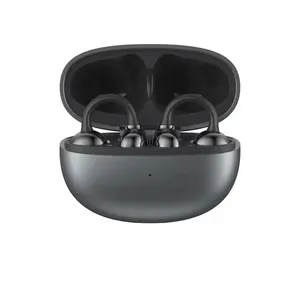
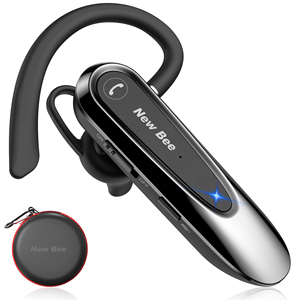
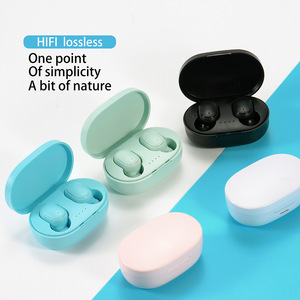
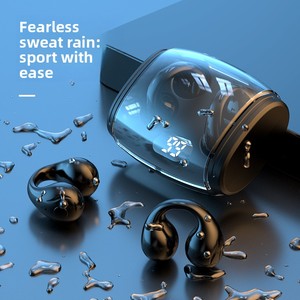
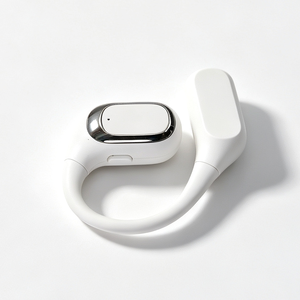
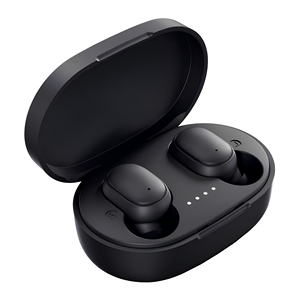
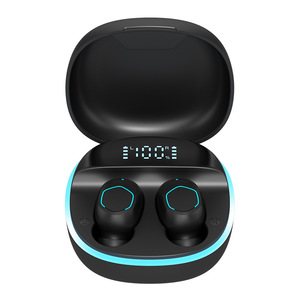
Global brands are increasingly bundling laptop power bricks with mobile accessory ecosystems. As highlighted by our integrated ODM manufacturing range, providing co-branded ecosystem packages—combining USB-PD laptop chargers, high-capacity power banks, desktop ambient lighting hubs, and low-latency TWS earphones—drastically improves average order values (AOV) and strengthens brand loyalty in corporate and retail distribution channels.
OEM Manufacturing Quality Assurance Matrix
Every batch engineered in our production facilities undergoes rigorous automated optical inspection (AOI) and multi-stage testing prior to master-carton packaging:
- High-Voltage Isolation (Hipot Test): 3,000V AC / 5mA / 60 seconds primary-to-secondary dielectric strength test.
- Burn-In Aging Chamber: 100% full-load continuous burn-in at 45°C ambient temperature for 48 hours.
- Acoustic Noise Testing: Anechoic chamber verification ensuring inductor/transformer noise remains below 20 dBA.
- ESD & Surge Immunity: Electrostatic discharge protection up to ±15kV air / ±8kV contact discharge.
What are your factory's Minimum Order Quantities (MOQ) for custom OEM laptop chargers?
Our standard MOQ for OEM private-label custom colorways, silk-screen logos, and custom packaging starts at 1,000 units per SKU. For deep ODM customization involving customized PCB layouts, proprietary outer shell tooling, or bespoke firmware protocol stack adjustments, the typical MOQ is 3,000 to 5,000 units depending on the power rating and component complexity.
How do your OEM laptop chargers guarantee safety during 140W+ high-load continuous output?
Safety is built into both hardware and firmware. We utilize dual NTC thermistors situated directly over the primary GaN ICs and secondary rectifiers to provide continuous real-time temperature monitoring. If internal temperatures exceed preset safety thresholds (typically 85°C), the internal MCU intelligently throttles output power to prevent damage. Furthermore, all units feature hardware-level Over-Voltage Protection (OVP), Over-Current Protection (OCP), Short-Circuit Protection (SCP), and 3000V AC Hipot isolation protection.
What international regulatory certifications do your chargers carry?
Our manufacturing platforms are designed to comply with worldwide safety standards. We manage full certification workflows including UL62368-1 (North America), CE / LVD / EMC (Europe), BIS (India), PSE (Japan), KC (Korea), CCC (China), and CB scheme test certificates. All production lots comply with RoHS 2.0, REACH, and Energy Star Level VI efficiency benchmarks.
Can your factory handle co-developed custom branding and tooling modifications?
Yes. Our in-house industrial design and mechanical engineering teams offer end-to-end ODM services, including 3D CAD modeling, rapid prototyping, custom plastic injection tooling, heat sink design, multilingual manual translation, and retail box artwork design. We also support regional AC plug variations (US, EU, UK, AU, India BIS pin configurations).
What is the typical lead time from prototype validation to mass production dispatch?
Standard prototype samples with existing tooling require 5 to 7 business days. Custom OEM orders requiring logo branding, custom colors, and retail packaging are produced within 25 to 30 days. Full custom ODM projects requiring dedicated plastic injection molds and compliance certification testing typically take 45 to 60 calendar days from initial engineering sign-off.
How does your factory ensure power supply stability and low ripple noise for delicate laptop logic boards?
We integrate multi-stage LC output filtering networks along with high-grade solid polymer aluminum capacitors. This keeps DC output ripple and noise under 100mV peak-to-peak under full dynamic load conditions, preventing touch-screen erratic behavior, trackpad jitter, or audio interference on high-end laptops.