Engineered with high-density PCB layouts, multi-protocol fast charging chipsets, and rigorous thermal protection for international retail brands and distributors.




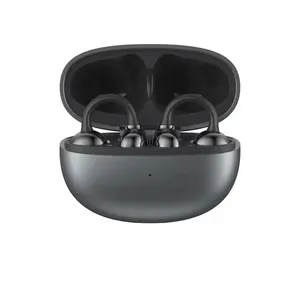



We are an established consumer-technology engineering house, not a generic re-badging trader. Industrial design, acoustic tuning, power management firmware, and after-sales support are handled by dedicated in-house R&D teams.
Every single production batch undergoes 48-hour continuous full-load thermal burn-in, drop testing, acoustic frequency-response matching, and cycle degradation tests before dispatch, keeping RMA rates under 0.18%.
Our engineering laboratory develops proprietary power distribution algorithms, dynamic power sharing (PD 3.1 / PPS), customized ANC noise cancellation curves, and precision tooling tailored to brand identity.
Full regulatory readiness across international markets. Production runs are certified for BIS, CE, RoHS, FCC, and UL standards, complete with localized multilingual documentation and customs compliance support.
Information Gain Insight: Modern automotive charging architectures require multi-protocol dynamic power allocation. Unlike standard car chargers that throttles speed when dual devices are plugged in, our OEM GaN Fast Charger Series utilizes smart microcontrollers to dynamically negotiate voltage steps (PD 3.1 100W/140W PPS) while maintaining an ambient chassis surface temperature below 42°C under full 12V/24V socket load.
The global automotive power accessory market is experiencing a profound technological transformation. Driven by modern smartphone batteries requiring 65W to 140W rapid charging, power-hungry laptops operated inside vehicles, and modern Electric Vehicle (EV) cockpit auxiliary systems, standard 12V/24V cigarette lighter car chargers are no longer basic passive adapters. They have evolved into high-frequency, thermal-managed, intelligent micro-powerhouses.
As a leading OEM/ODM Car Charger Manufacturer & Exporter, our manufacturing facility bridges the gap between raw semiconductor technology (Gallium Nitride - GaN III / Silicon Carbide - SiC) and consumer-ready automotive accessories. This whitepaper provides procurement directors, brand owners, and electronics distributors with the technical depth and market intelligence required to evaluate automotive power charging hardware in 2026 and beyond.
Vehicle charging environments present extreme electrical stress compared to household AC wall outlets. The primary engineering challenge for automotive power adapters lies in handling voltage ripple, load dump spikes (ISO 7637-2 transients), ambient cabin heat accumulation, and strict Electromagnetic Interference (EMI) constraints.
Distributors and importers seeking high margin retention must align their sourcing pipelines with upcoming technological shifts. Our market research highlights four key vector trends dominating B2B procurement for automotive electronics:
Transition from PD 3.0 to PD 3.1 Extended Power Range (EPR). Car chargers capable of delivering 28V/5A (140W) enable true full-speed charging for high-end laptops, mobile power stations, and professional video gear directly inside vehicles.
Consumer preferences have shifted away from cheap ABS plastic shells toward precision CNC-machined zinc alloy, anodized aluminum, and heat-resistant transparent polycarbonate that showcases internal copper coils and futuristic ambient LED lighting.
Integrating car chargers into broader mobile gear kits—such as hybrid TWS earbud charging cases, magnetic MagSafe vehicle mounts, and emergency jump-starter multi-tools—enables high-value bundled product offerings.
Furthermore, regional regulatory compliance is becoming stricter worldwide. Procurement managers must ensure their ODM suppliers adhere to stringent energy efficiency standards (DoE Level VI, CoC Tier 2) and obtain regional certifications such as BIS (India), CE/RoHS (Europe), FCC/UL (North America), and PSE (Japan).
Selecting the wrong manufacturing partner often leads to hidden costs—such as thermal throttling customer complaints, elevated return rates, radio interference with car FM/DAB audio, and structural cracking from cabin vibration. Below is an engineering comparison matrix:
| Evaluation Parameter | Tier-3 Generic Factories | Our OEM/ODM Manufacturing Standard | B2B Sourcing Value Impact |
|---|---|---|---|
| Power Semiconductor | Recycled Silicon MOSFETs | Navitas / Innoscience GaN III Chips | +40% Efficiency, 50% Lower Heat |
| Thermal Management | Minimal plastic housing casing | Zinc Alloy Body + NTC Real-time Sensors | Eliminates power throttling drop-offs |
| Voltage Transient Test | Basic bench testing | ISO 7637-2 Automotive Transient Test | Zero failure during car engine ignition |
| Quality Control Gate | Spot checking (AQL 2.5) | 100% 48-Hour Full-Load Thermal Burn-In | RMA Return Rate drops below 0.18% |
| Protocol Compatibility | Basic QC 3.0 / PD 2.0 | PD 3.1, PPS, QC 5.0, SCP, AFC, Apple 2.4A | Universal compatibility across all flagship phones |
| Private Label Support | Logo silk-printing only | Custom Tooling, Packaging, Firmware & CCT | High brand differentiation on retail shelves |
We provide global distributors and brand managers with a transparent, streamlined 6-step manufacturing process to take custom automotive accessories from concept to retail delivery:
Our manufacturing capabilities cover a complete range of automotive power adapters: from 20W mini USB-C chargers to 140W GaN dual-port fast chargers, heavy-duty 24V truck chargers, multi-port seat extenders, wireless MagSafe car mounts, and customized smart audio TWS bundles. All designs support PD 3.1, PPS, QC 5.0, and SCP protocols.
All production lots are engineered to pass BIS (India), CE, RoHS, FCC, UL, and REACH testing depending on your destination market. We provide complete laboratory test reports, declaration of conformity (DoC) certificates, and MSDS/UN38.3 documentation for shipping.
Electrical noise (EMI) is a common defect in low-cost chargers. Our PCB layouts feature built-in common-mode chokes, shielded inductors, and passive filter stages that comply with CISPR 25 Class 3/5 automotive electromagnetic compatibility standards, guaranteeing zero radio noise or dashboard signal interference.
For standard custom logo laser-engraving and localized packaging, our MOQ starts at 1,000 units with a turnaround time of 15–20 business days. For full ODM project tooling (custom housing shapes and proprietary PCB layouts), lead time is typically 35–45 days including tooling validation.
Every single production lot undergoes 100% 48-hour burn-in testing under max load in high-temperature aging rooms. Additional tests include 10,000-cycle plug insertion tests, 1.5-meter drop tests, thermal camera heat mapping, high-voltage isolation tests, and acoustic/vibration testing.
Yes. Every SKU shipped from our factory carries a documented 12-month manufacturer warranty. In the rare event of functional defects exceeding AQL 0.4 limits, we provide immediate replacement units or credit backings in subsequent container shipments.
Partner directly with a certified manufacturing facility. Contact our engineering team today to request 3D CAD catalogs, product samples, factory audit reports, and competitive FOB quotes.
Contact Us