

Explore our export-grade wireless audio devices and smart wearable components, fully customizable for private label, enterprise distribution, and OEM/ODM deployment.
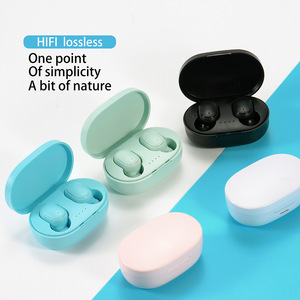
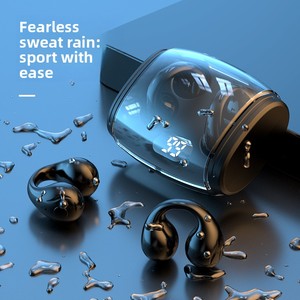
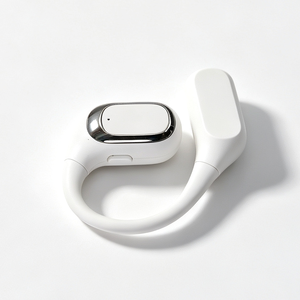
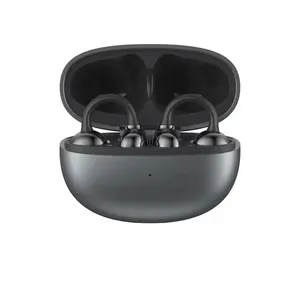
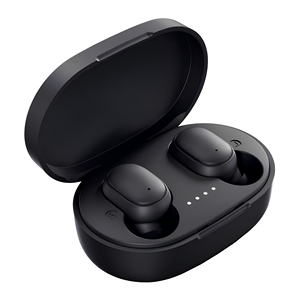
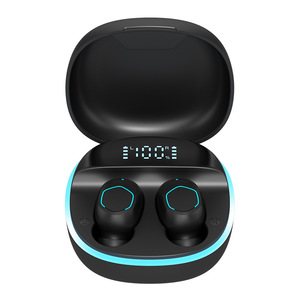
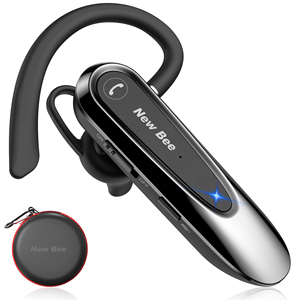
The global consumer electronics landscape is undergoing a paradigm shift from traditional hand-held mobile devices to hands-free, ambient computing interfaces. As an established OEM/ODM Smart Glasses Manufacturer & Exporter, our engineering division sits at the intersection of spatial micro-acoustics, lightweight optical integration, low-power semiconductor architecture, and bespoke industrial design. Smart audio glasses and heads-up vision eyewear represent the fastest-growing segment in personal wearable technology, replacing standard head-worn gear with ergonomic, everyday-wear frame factors.
Contract manufacturing of smart glasses requires a strict departure from conventional consumer electronics assembly lines. Achieving a total frame weight of under 40 grams—while embedding dual directional beamforming microphones, micro-speakers, touch-capacitive control strips, dynamic Bluetooth 5.4 SoCs, and dual lithium-polymer batteries—demands ultra-precise micro-soldering, subterranean PCB trace routing, and acoustic cavity isolation. This technical document details the engineering considerations, future procurement shifts, technical specifications, and quality assurance frameworks required to deliver market-leading OEM/ODM smart glasses solutions for international brands, enterprise distributors, and retail channels.
Strategic Manufacturing Insight: Product differentiation in 2026 and beyond is driven by acoustic privacy algorithms, seamless weight distribution across the nasal bridge and temporal bones, and turnkey firmware customization that allows instant connectivity with enterprise voice assistants and edge AI models.
To produce consumer-ready smart eyewear that balances comfort, battery longevity, and acoustic acoustic clarity, our OEM/ODM manufacturing protocols prioritize four core engineering pillars:
Unlike standard in-ear TWS headphones that isolate the user from their environment, smart audio glasses rely on open-ear acoustic wave manipulation. Our engineering labs utilize custom micro-transducers mounted precisely within the temple arms. Sound waves are funneled directly toward the user's ear canal via calibrated acoustic ports, while secondary reverse-phase acoustic vents project inverted soundwaves outward to eliminate audio leakage.
Wearability is the single biggest factor governing user retention. If a pair of smart glasses exceeds 45 grams or lacks proper flex points, long-term wear causes cranial pressure and fatigue. Our ODM framework offers advanced materials selection tailored for both style and durability:
Our smart glasses platform integrates market-leading Bluetooth chipsets (including customized JL 5.3/5.4 and high-end Qualcomm Snapdragon AR/audio chipsets). Maintaining stable RF transmission through human cranial tissue requires customized LDS (Laser Direct Structuring) or FPC (Flexible Printed Circuit) antenna designs embedded directly into the temple arms.
Procurement teams and product managers sourcing smart eyewear must align their product roadmaps with key structural shifts occurring across global supply chains. Based on multi-year telemetry and contract production data, we identify three critical procurement trends shaping the OEM/ODM ecosystem:
The traditional boundary separating consumer audio gear, prescription optical frames, and smart wearables has collapsed. Enterprise buyers are increasingly demanding prescription-ready smart frames. Our OEM production lines incorporate detachable front-rim chassis mechanisms, enabling optical labs to fit prescription lenses (single vision, progressive, blue-light blocking, and photochromic) without altering the underlying electronic temples.
Building a ground-up smart glasses tooling layout can take 9 to 12 months in development fees. To compress this timeline, global brand managers are utilizing our pre-certified Smart Temple ODM Modules. By selecting pre-tested, certified temple electronics (incorporating PCB, battery, audio transducer, and touch sensors), brands can customize only the front frame aesthetic, reducing time-to-market from 12 months down to less than 60 days.
International customs, environmental agencies, and safety standards bodies have heightened scrutiny over head-worn lithium-polymer battery devices. Sourcing partners require full supply chain visibility, including ISO-certified manufacturing facilities, UN38.3 battery shipping certifications, MSDS documentation, and full compliance with RoHS 2.0, REACH, CE-RED, FCC ID, and BIS requirements.
Partnering with a dedicated engineering house ensures that your smart glasses project benefits from deep technical expertise rather than generic trading operations. Our enterprise capabilities include:
Every audio frame profile undergoes rigorous artificial-ear simulation and frequency-response mapping to guarantee low audio leakage and crystal-clear voice pick-up.
100% of production lots pass mandatory 48-hour burn-in testing, drop tests, thermal cycling, and charge-cycle validation prior to master carton packaging.
We provide comprehensive test reports and declarations for FCC, CE, RoHS, and BIS, guaranteeing smooth customs clearance across North America, Europe, and Asia.
Our engineering suite supports extensive private-labeling options, ranging from laser-engraved temple branding, custom voice-prompt firmware localized in 15+ languages, custom companion Android/iOS app SDK development, to bespoke eco-friendly retail packaging boxes.
When executing a custom smart glasses program, we guide brand partners through a structured, multi-stage engineering gate process designed to mitigate risk and guarantee product compliance:
Direct technical and commercial answers for OEM buyers, distributors, and product managers.
Speak directly with our technical sales engineers to request sample units, review detailed BOM specifications, or receive a fast contract manufacturing quote within 24 hours.
Inquire Now