Deployable turnkey platforms with customizable PCB layouts, localized firmware, BIS/CE/RoHS compliance, and private-label packaging options.
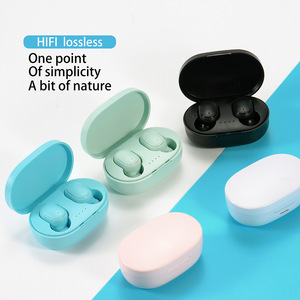
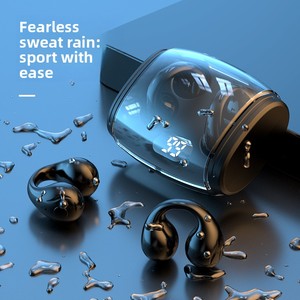
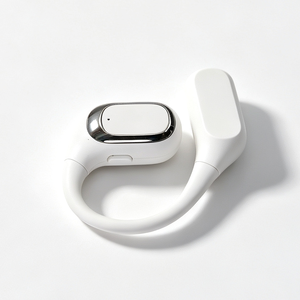
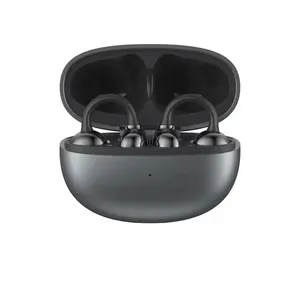
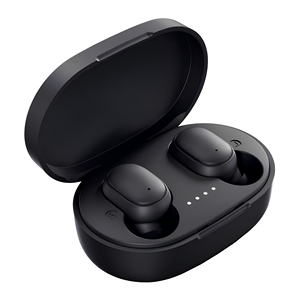
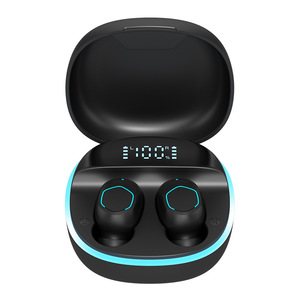
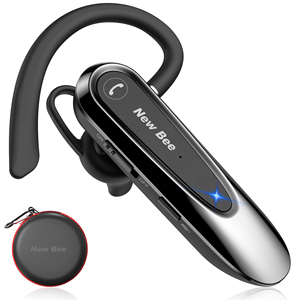
Original Equipment Engineering (OEM) and Original Design Manufacturing (ODM) anchored on rigid quality assurance standards and full supply-chain control.
Every smartwatch motherboard layout, bio-sensor module, dynamic acoustic driver, and RF antenna is frequency-matched and calibrated for target signal-to-noise ratio (SNR) before tool freezing.
Production runs undergo rigorous environmental testing including 48-hour burn-in, multi-angle drop tests, IP68 water submersion, lithium battery cycle validation, and acoustic response tracking.
Full support for international market entry. All hardware platforms can be manufactured to satisfy BIS, CE, RoHS, FCC, and REACH compliance requirements tailored to your target distribution region.
Custom UI development, multi-lingual companion applications, specialized watch-face design, customized Bluetooth pairings, and integration of custom telemetry algorithms for fitness and enterprise tracking.
Turnkey packaging development including master carton optimization, custom die-cut gift boxes, multi-language manual translation, localized barcode labeling, and retail-ready shelf displays.
Streamlined logistics handling direct-to-door (DDP) shipments worldwide, supporting bonded warehousing, air/sea freight routing, transparent customs clearance, and cargo insurance options.
Baseline structural specifications across our core smart wearable and integrated wireless audio manufacturing lines.
| Specification Subsystem | Standard OEM Baseline | Advanced ODM Custom Options |
|---|---|---|
| Main Processor / Chipset | JL / Realtek / Nordic Core MCU | Ambiq Micro Ultra-Low Power / Dialog / Qualcomm Wireless Platform |
| Bio-Sensing Telemetry | Single-LED Dynamic PPG (Heart Rate + SpO2) | Multi-Channel Optical Array, ECG Electrodes, Continuous Skin Temperature Sensor |
| Display Hardware | 1.3" - 2.01" TFT HD Touch Display (320x385) | AMOLED Curved Screen, Always-On-Display (AOD), 1000 nits Peak Brightness |
| Enclosure & Finishing | ABS + PC Reinforced Housing, Zinc Alloy Bezel | CNC Machined Aircraft Aluminum, Stainless Steel, Titanium Finish, Sapphire Glass |
| Waterproof Rating | IP67 / IP68 Ingress Protection | 5 ATM / 10 ATM Diving-Grade Waterproof Structural Seals |
| Battery & Charging | 180mAh - 300mAh Li-Po, Magnetic Pogo-Pin | 450mAh+ High-Density Cell, Qi Wireless Charging, Fast Charging IC (80% in 30 min) |
The global smart wearable ecosystem is undergoing a fundamental structural transition from basic activity counting toward medical-grade health monitoring and ambient edge computing. As an established OEM/ODM smart watch manufacturer and specialized engineering factory, we track and implement key technological breakthroughs directly into our production lines to provide global buyers with high-margin competitive advantages.
Modern consumers demand actionable health intelligence rather than raw step counts. The integration of high-precision Photoplethysmography (PPG) arrays combined with custom Digital Signal Processing (DSP) algorithms allows current-generation smartwatches to continuous measure blood oxygen saturation (SpO2), heart rate variability (HRV), stress indices, and sleep phase staging. OEM production pipelines are increasingly focusing on signal isolation techniques to filter out movement artifacts during high-intensity sports activity, achieving accuracy profiles that closely rival medical diagnostic equipment.
Information Gain Insight: Next-generation ODM contracts are shifting emphasis from hardware cost to software-algorithm synergy. Factories providing custom SDKs with pre-calibrated bio-sensing algorithms allow brand owners to drastically reduce time-to-market and regulatory overhead.
Display performance and battery longevity have historically represented conflicting engineering constraints. However, recent advances in dual-core MCU architectures enable smart wearables to utilize low-power co-processors for background sensor polling while delegating rich graphical rendering to high-performance graphic cores only when activated. Coupled with energy-efficient AMOLED screens offering sub-millisecond pixel response times and high contrast ratios, modern wearables can maintain Always-On Display (AOD) functionality while sustaining multi-day operational autonomy on a single charge cycle.
Artificial Intelligence is moving directly onto the wrist. By embedding compressed light-weight AI models into wearable firmware, modern smart watches can perform real-time offline voice processing, contextual intent recognition, and personalized fitness coaching without relying on continuous cloud connectivity. This shift dramatically improves user privacy, reduces latency, and unlocks novel enterprise use cases in healthcare, industrial safety, and smart home automation.
The boundary between wrist wearables and hearables is dissolving. Dual-purpose hardware architectures—such as smart watch enclosures housing detachable TWS earbuds or synchronized biometrics across hearables and wrist bands—are opening entirely new product categories. Our facility specializes in optimizing localized Bluetooth 5.3/5.4 multi-point synchronization, ensuring instantaneous audio switching and seamless sensor data aggregation across multi-device wearable ecosystems.
Navigating global electronics procurement requires anticipating supply chain evolutions, regulatory shifts, and consumer preferences. For brand managers, importers, and regional technology distributors, structured strategic sourcing strategies are critical for maintaining healthy retail margins and operational agility.
Customizing a smartwatch completely from scratch (full custom tooling) often incurs substantial non-recurring engineering (NRE) costs and extended development cycles of 9 to 12 months. Forward-thinking buyers are increasingly leveraging modular OEM platforms—pre-certified hardware baselines with modular bezels, customizable straps, and flexible firmware hooks. This strategy slashes time-to-market down to 30–45 days while keeping unit production economics highly competitive.
Environmental legislation across the European Union, North America, and parts of Asia-Pacific is imposing stricter compliance demands regarding electronic waste (RoHS/WEEE) and retail packaging materials. B2B procurement trends favor manufacturing partners who utilize 100% recyclable master cartons, biodegradable soy-based inks, plastic-free internal trays, and ethically sourced post-consumer recycled (PCR) aluminum alloy frames.
Supply Chain Strategy: Leading electronics distributors now require comprehensive Bill-of-Materials (BOM) transparency, conflict-mineral declarations, and documented factory carbon footprint benchmarks during initial factory audit phases.
Post-pandemic logistics realities dictate that manufacturing capabilities must be paired with frictionless global fulfillment. Modern factory partnerships extend beyond the loading dock. By integrating Delivered Duty Paid (DDP) logistics channels directly from the assembly line to destination distribution centers, buyers eliminate unexpected tariffs, customs delays, and complex import brokerage handling.
Essential insights covering minimum order quantities, customization scope, quality standards, and logistics processes.
Transform your consumer technology portfolio with our validated engineering platforms, rapid prototyping, strict quality control standards, and competitive manufacturing pricing.
Contact Us