Customizable wireless audio platforms engineered for global distributors, retail brands, and enterprise buyers. Scalable manufacturing with guaranteed compliance.
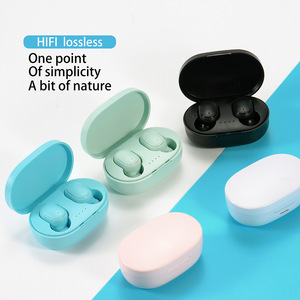
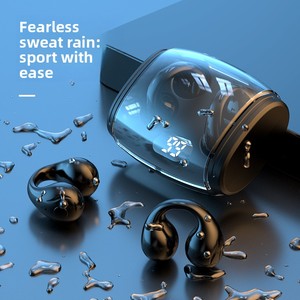
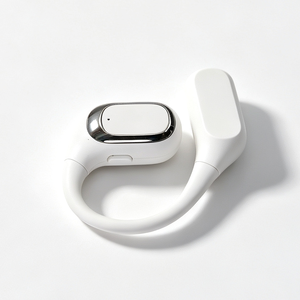
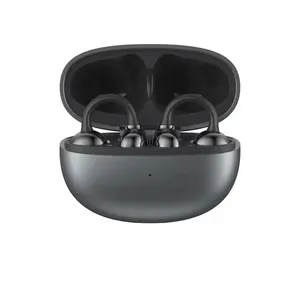
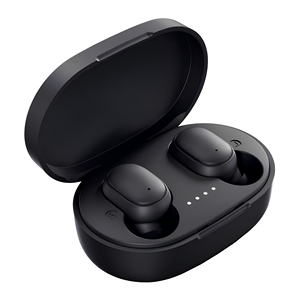
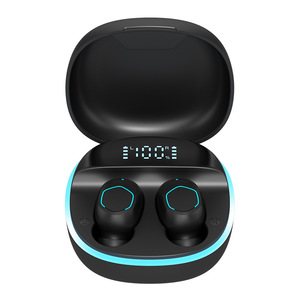
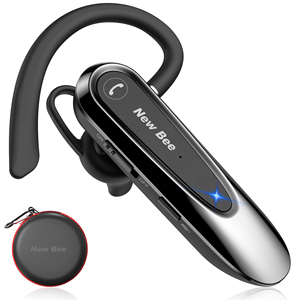
The global True Wireless Stereo (TWS) market has transitioned from basic wireless convenience into a high-stakes arena of embedded acoustic intelligence, micro-power management, and custom system-on-chip (SoC) architectures. For B2B buyers, brand owners, and cross-border distributors, evaluating an OEM/ODM Wireless Earphones Manufacturer & Factory requires looking beyond superficial aesthetic designs. It demands auditing a partner's industrial design maturity, firmware tailoring capabilities, compliance protocols, and component yield rates.
As consumer expectations shift toward zero-latency gaming audio, hybrid active noise cancellation (ANC), and clear environmental noise cancellation (ENC) for remote work calling, factory-level innovation dictates market success. Below are the key technological and purchasing macro-trends reshaping global OEM/ODM procurement strategies:
Modern wireless audio manufacturing is anchored by next-generation silicon. While entry-level platforms utilize optimized JL (Jieli) chipsets for cost-effective mass-market distribution, mid-to-flagship OEM tiers are rapidly standardizing on Bluetooth 5.4 and LE Audio (Low Energy Audio) architectures. Leveraging the LC3 (Low Complexity Communication Codec), advanced factories can now deliver superior acoustic fidelity at half the bit-rate compared to classic SBC codecs, extending battery life by up to 25% while reducing latency below 40ms for ultra-responsive gaming performance.
Clear voice capture in noisy environments has evolved from a luxury feature into a mandatory baseline. ODM manufacturing now integrates dual-microphone and quad-microphone arrays coupled with Deep Neural Network (DNN) noise reduction algorithms. By processing acoustic signals in real time, current OEM platforms isolate vocal frequencies while dampening ambient street, wind, and crowd noise by up to 35dB–45dB.
Energy density and battery safety remain core operational metrics. Tier-1 ODM operations have moved toward high-density lithium-polymer button cell batteries featuring localized battery protection ICs. This minimizes self-discharge rates, protects against overcharging voltage spikes, and ensures long-term cycle stability (exceeding 500 charge cycles at >80% capacity retention). Furthermore, factories are introducing eco-certified post-consumer recycled (PCR) plastics to meet stringent EU sustainability directives.
In-house DSP engineering enables tailored frequency response curves, customized Bluetooth pairing IDs, multi-language voice prompts, and specialized low-latency gaming profiles.
Rapid 3D prototyping, customized ergonomic ear-canal molding, IPX4 to IPX8 structural waterproofing seals, and premium surface finishes (UV gloss, matte rubberization, metallic plating).
Comprehensive international qualification pipelines: CE, RoHS, FCC, BIS, KC, and TELEC certifications issued alongside complete Bill of Materials (BOM) transparency.
To assist enterprise procurement officers in selecting optimal specifications for their market segment, our engineering team has compiled a technical comparative breakdown of current OEM hardware tiers:
| Architecture Tier | Target Core SoC | Bluetooth Version | Noise Cancelling Tech | Battery Life (Single Charge) | Waterproof Grade | Primary Commercial Application |
|---|---|---|---|---|---|---|
| Entry Mass-Market | JL (Jieli) / AC Series | v5.3 / v5.4 | Software ENC (Single Mic) | 3.5 – 5 Hours | IPX4 (Sweat Resistant) | High-Volume Promotional / Retail Bundles |
| Mid-Tier Performance | Realtek / Jerry Advanced | v5.3 / v5.4 | Dual-Mic DNN ENC (-28dB) | 6 – 8 Hours | IPX5 (Water Jet Proof) | E-Commerce Brands & Fitness Lines |
| Flagship Acoustic | Qualcomm QCC / BES | v5.4 LE Audio | Hybrid ANC & Quad-Mic ENC (-45dB) | 8 – 10 Hours | IPX7 (Submersible) | Premium Audiophile & Business Telephony |
| Open-Ear / Sports | Low-Power DSP Hybrid | v5.4 Directional | Air Conduction Acoustic Beam | 10 – 12 Hours | IPX6 / IPX7 | Outdoor Running, Cycling, Safety Audio |
Partnering with an experienced TWS factory eliminates friction across product design, tooling, and international distribution. Our manufacturing workflow adheres to ISO9001 and BSCI standards, implementing strict Quality Assurance (QA) gates at every phase of assembly:
Reliable OEM manufacturing requires robust technical infrastructure. Our production facilities operate integrated cleanroom assembly lines optimized for delicate acoustic assembly, high-speed SMT placement, and rigorous physical stress testing.
Inside our specialized acoustic lab, specialized artificial head-and-torso simulators (HATS) and anechoic test chambers measure exact sound pressure levels (SPL) and microphone sensitivity. This ensures that every earbud leaving the production floor reproduces clean bass, articulate mids, and crisp highs without acoustic distortion.
Battery safety is paramount. All incoming lithium cells are subjected to strict incoming quality control (IQC), including overcharge simulation, short-circuit protection testing, and thermal strain analysis. Combined with automated SMT optical inspection (AOI), we maintain zero-defect standards across critical micro-circuitry.
Navigating global customs requires meticulous documentation. As a global exporter, we supply full MSDS (Material Safety Data Sheet), UN38.3 lithium battery transport test reports, commercial invoices, certificate of origin docs, and custom tariff classification support to guarantee frictionless customs clearance.
Clear responses to common procurement, custom branding, and technical manufacturing inquiries:
Connect directly with our senior acoustic engineers and export managers to receive detailed engineering specifications, sample requests, and transparent quotation benchmarks.