Direct factory production lines engineered for global distributors, healthcare brands, and consumer technology importers requiring turnkey hardware and custom SDK integration.
The global wearable device market has reached a pivotal juncture. As consumer expectations shift from basic pedometers to clinical-grade health tracking instruments, China's smart fitness tracker manufacturing hub—centered predominantly in the Pearl River Delta (Shenzhen, Dongguan, and Huizhou)—has evolved from pure contract assembly to advanced OEM/ODM R&D co-creation.
Modern fitness tracker manufacturing requires a intricate convergence of micro-electronics engineering, biomedical signal processing, ultra-low-power radio frequency (RF) design, and precision injection molding. Leading Chinese exporters no longer compete solely on unit cost; their core competitive moat lies in algorithm optimization, sensor fusion architecture, fast SDK/API provisioning, and stringent quality assurance protocols certified to international standards such as ISO9001, ISO13485 (Medical Devices), BSCI, and CE/FCC/RoHS compliance.
For international buyers, brand owners, and regional electronics distributors, navigating China's OEM supply chain requires a nuanced understanding of hardware tiers, chipset selections (such as Nordic Semiconductor, Dialog/Renesas, Realtek, and Ambiq Micro), and biosensor integration capacities (Analog Devices AFEs, Texas Instruments front-ends, Goodix optical sensors). Selecting the right manufacturing partner dictates not only product reliability but also the long-term scalability of client software ecosystems.
Dual-wavelength optical photoplethysmography paired with single-lead ECG electrodes for real-time arrhythmia, SpO2, and HRV extraction.
Ultra-low power ARM Cortex-M4/M33 architecture enabling 10 to 30 days of continuous operation without recharging screenless bands.
Comprehensive iOS, Android, and Web Bluetooth API integration kits enabling rapid custom app deployment for telehealth enterprise partners.
When sourcing fitness trackers from China, buyers encounter three distinct manufacturer categories. Understanding the operational parameters of each factory tier ensures realistic alignment with project budgets, MOQs, and engineering complexity.
| OEM Factory Criteria | Tier-1 ODM Engineering Hubs | Tier-2 Specialized Niche Exporters | Tier-3 Mass Assembly Traders |
|---|---|---|---|
| Primary Target Market | Global Tier-1 Health & Electronics Brands | Mid-Market Brands, Telehealth Integrators | High-Volume Promotional / Budget Retailers |
| Main Chipset Families | Nordic nRF5340, Dialog DA14695, Ambiq | Realtek 8763E, Nordic nRF52832, JL Chipsets | Generic Low-Cost MCU Platforms |
| Sensor Technology | Clinical Medical-Grade ADI AFE, Goodix PPG | Industrial-Grade PPG, 6-Axis Accelerometers | Basic Single-Green-LED Optical Sensors |
| Customization Depth | Full ID/MD, Firmware Source, Custom Tooling | Logo Etching, Casing Colors, App SDK Branding | Basic Silk-Screen Logo & Packaging Only |
| Quality Control Protocol | 100% 48-Hour Burn-In, IP68 Pressure Tank, ESD | AQL 1.0 / 2.5 Sampling, Aging Chamber Testing | Standard Visual Inspection & Power-On Test |
| Typical Minimum MOQ | 3,000 – 5,000 Units per SKU | 500 – 1,000 Units (Low MOQ Support) | 100 – 500 Units (Ready Stock Tooling) |
*Table data based on industry averages compiled across Shenzhen and Dongguan manufacturing hubs for 2026 product lines.
The consumer fitness tracker landscape is undergoing rapid differentiation. The convergence of micro-biometrics, machine learning algorithm miniaturization, and novel industrial designs is giving rise to next-generation product archetypes:
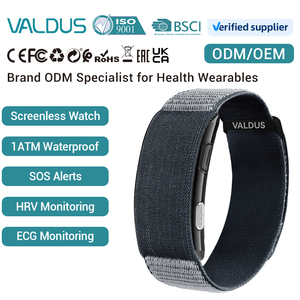
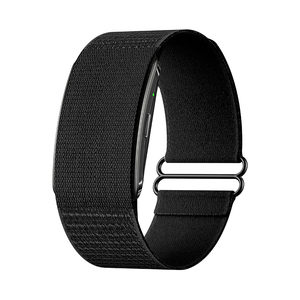
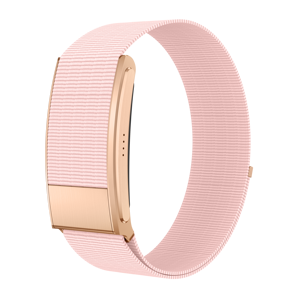
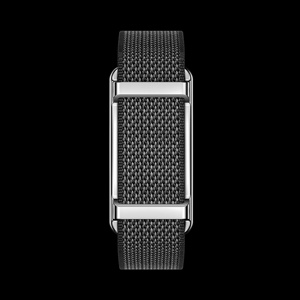
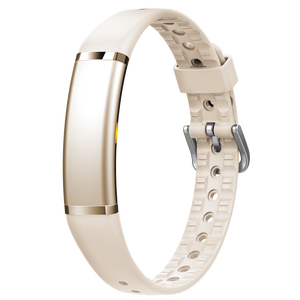
Screenless smart bracelets (such as the VALDUS and VITRO series highlighted in our catalog) represent a major growth vector. By omitting power-hungry OLED/TFT displays, these devices optimize energy for 24/7 continuous PPG sampling, HRV (Heart Rate Variability) analysis, skin temperature monitoring, and high-frequency movement recording via 6-axis IMUs. They cater to users seeking distraction-free health monitoring, passive recovery tracking, and extended 14-to-30 day battery life.
Electrocardiogram (ECG) technology has transitioned from clinical equipment to compact wristwear. Dual-electrode arrangements integrated into bottom casing contacts allow users to capture single-lead ECG waveforms within 30 seconds. Advanced factory processing algorithms convert these signals into indicators for atrial fibrillation (AFib), early arrhythmia warnings, arterial stiffness indices, and autonomic nervous system stress scores.
With low-power AI neural processing units (NPUs) embedded directly into microcontrollers, modern fitness trackers process raw motion and biometric data on the edge. Rather than relying on smartphone connectivity to calculate sleep stages or classify swim strokes, onboard edge algorithms analyze biometric raw data directly, reducing latency, saving battery, and enhancing user data privacy.
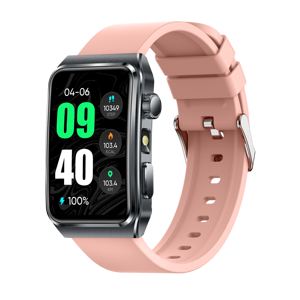
Next-generation trackers integrate NTC thermal sensors for continuous basal body temperature tracking alongside red/infrared dual-wavelength optical PPG modules for precise nocturnal Blood Oxygen (SpO2) detection. When combined with meeting recording functionality, haptic reminder motors, and IP68 waterproof enclosures, the smart band transforms into an indispensable lifestyle hub.
Global procurement directors and supply chain managers face shifting market realities when negotiating OEM/ODM contracts with Chinese manufacturers. Key procurement trends shaping 2026 agreements include:
Our featured manufacturing partners operate vertically integrated facilities in Shenzhen and Dongguan, encompassing tooling design, SMT surface mount lines, automated ultrasonic sealing, and cleanroom bio-sensor calibration chambers. Every shipment is subjected to an exhaustive quality gate framework:
Clear answers to critical operational, technical, and logistical questions encountered during the factory audit and contract negotiation phases:
Request detailed spec sheets, hardware teardowns, SDK documentation, and tiered volume quotation prices for your upcoming 2026 product lineup.