The global e-sports gaming mouse market is undergoing a seismic shift driven by demand for ultra-low latency, sub-50-gram chassis construction, high-frequency polling rates (up to 8000Hz), and AI-assisted hardware telemetry. As leading China gaming mouse suppliers and exporters, our engineering consortium bridges the gap between raw hardware innovation—such as PixArt PAW3950 flagship optical sensors and Nordic 52840 MCU integration—and full-scale commercial manufacturing.
This industry procurement whitepaper outlines technical benchmarks, supply chain dynamics, dynamic component selection, and verified manufacturing workflows essential for global brand owners, distributors, and e-commerce aggregators seeking competitive advantage through OEM/ODM partnerships.
Below is our curated product showcase featuring advanced esports mice, wireless multi-device combos, custom carbon fiber chassis models, and high-DPI wired/wireless gaming peripherals engineered for volume export.
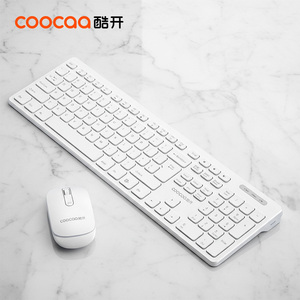
Plug-and-play desktop gaming combo engineered with spill-resistant membrane design and optimized optical tracking for office and e-sports work.
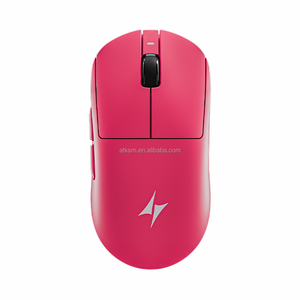
Equipped with PixArt's premier PAW3950 sensor, sub-49g weight balancing, and Nordic wireless MCU for flawless 4K/8K tracking precision.
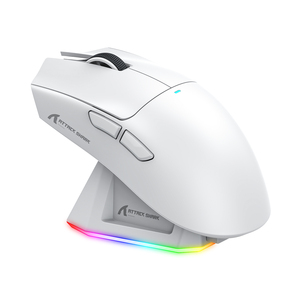
Features magnetic quick-charge dock, 2.4G/BT5.3/Wired modes, dynamic lighting, and lightweight ergonomic casing for competitive play.
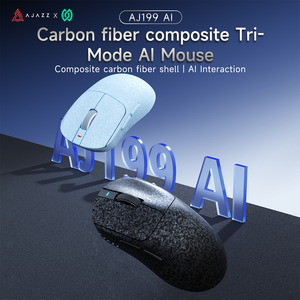
Cutting-edge composite carbon fiber structure paired with AI voice interaction software, delivering immense structural strength at minimal weight.
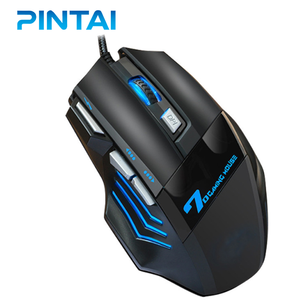
Classic multi-button layout designed for MMO/MOBA macro execution, textured side grips, and durable Huano mechanical microswitches.
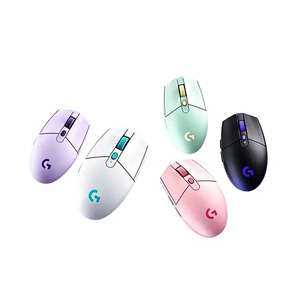
High-efficiency optical sensor tracking up to 25,600 DPI, low latency wireless dongle, and 80-hour continuous battery life per charge cycle.
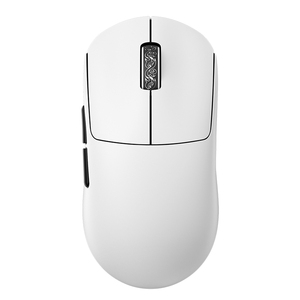
Industry-standard competitive esports mouse layout with frictionless PTFE skates, zero smoothing optical sensor, and onboard memory profiles.
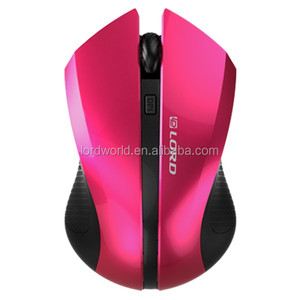
Next-generation 49g ultra-lightweight chassis supporting 4000Hz polling rate via high-speed wireless transceiver and optical microswitches.
Operating as a premier consumer-technology manufacturing partner, our operations rely on structured industrial design, in-house firmware development, acoustic click-tuning, and documented quality verification protocols. Rather than functioning as a standard OEM trader, our production infrastructure maintains complete control over raw materials, sensor calibration, and compliance documentation.
Every gaming mouse platform undergoes deep firmware customization. Our engineers fine-tune optical sensor tracking curves (PixArt PAW3395/3950) alongside Nordic Semiconductor MCUs to ensure zero motion sync jitter, zero glass surface acceleration, and precise CPI stepping.
Quality assurance is embedded in every assembly line. Production lots must pass strict drop tests, salt spray resistance, high-humidity temperature cycling, switch actuation balance, wireless signal packet-loss verification, and a standard 48-hour continuous burn-in test before master carton packing.
We facilitate frictionless global market entry. All hardware platforms are pre-tested and certified against CE, RoHS, FCC, REACH, and BIS compliance standards based on target destination markets, complete with full documentation and material safety datasheets (MSDS) for lithium-polymer batteries.
Supporting full OEM/ODM brand expansion, our facilities provide custom injection molding (ABS, PBT, Magnesium alloy, Carbon Fiber), bespoke color matching, custom box design, and driver software development (Windows/Mac app or Web Assembly browser-based driver configurations).
Understanding where gaming mouse engineering is headed allows procurement teams to make future-proof catalog choices. Over the next five years, four fundamental hardware shifts will redefine consumer expectations in the gaming peripheral market:
| Technology Vector | Legacy Standard (2020–2023) | Current Production Benchmark | Next-Gen Horizon (2026+) |
|---|---|---|---|
| Sensor & Tracking | 16,000 DPI / 400 IPS / 1KHz | 26,000–30,000 DPI / 650 IPS / 4KHz | PAW3950 / 8000Hz Motion-Sync Real-Time Tracking |
| Chassis Architecture | Honeycomb Perforated Shells (65g–80g) | Solid Shell Ultra-Light ABS (<55g) | Carbon Fiber & Magnesium Composite (<39g) |
| Micro-Switch Tech | 50M Mechanical Switches (Double-Click Prone) | Optical Switches (80M Click / Zero Debounce Delay) | Magneto-Optical Switches with Adjustable Actuation |
| Connectivity & Power | 2.4GHz Dongle / Micro-USB Charging | Tri-Mode Wireless / USB-C Fast Charge Docks | Near-Field Qi Charging & WebHID Browser Driver Software |
While early lightweight gaming mice relied on external honeycomb holes (which exposed PCBs to dust and moisture), China's manufacturing ecosystem has transitioned to ultra-thin wall injection molding and exotic materials. By leveraging forged carbon fiber and die-cast magnesium-aluminum alloys, factory lines now achieve structural rigidity at shell weights under 40 grams without sacrificing solid ergonomics.
Standard gaming mice report data to PCs at 1000Hz (1ms intervals). Next-generation gaming mice utilize high-throughput MCUs like the Nordic 52840 paired with specialized high-speed wireless transceivers to transmit data packets at 8000Hz (0.125ms intervals). This drastically reduces micro-stutter on modern 240Hz, 360Hz, and 540Hz gaming monitors.
Traditional mechanical switches suffer from metallic contact degradation over time, resulting in accidental double-clicks. China exporters are rapidly standardizing optical light-beam actuation micro-switches. Optical switches achieve sub-0.2ms response times, zero debounce delay requirement, and lifespan ratings exceeding 90 million clicks.
Global gamers increasingly reject bloated desktop software installations. Modern gaming mice produced in China now integrate WebHID firmware technology, allowing users to configure DPI steps, RGB effects, macro keybindings, and sensor lift-off distance (LOD) directly within Google Chrome or Microsoft Edge without downloading executable files.
Sourcing gaming peripherals directly from verified China suppliers requires analyzing dynamic macroeconomic supply chain shifts. Importers and brand owners must align their procurement strategies with modern sourcing trends:
Leading buyers are moving toward platform-based SKU architecture. By keeping the main internal PCB, sensor layout, and wireless transceiver constant while modifying outer ergonomic shells, brands reduce OEM tooling costs and speed up time-to-market by up to 60%.
Regulatory frameworks in Europe (RoHS, REACH, WEEE) and North America are mandating sustainable supply chains. Top China exporters are integrating post-consumer recycled (PCR) plastics into non-structural mouse parts and eliminating single-use plastic packaging in favor of FSC-certified gift boxes.
B2B procurement is shifting toward complete gaming desktop bundles. Distributors are sourcing matched sets featuring lightweight mice, magnetic charging docks, custom desk mats, and mechanical keyboards in consolidated retail-ready master carton packs.
Addressing core technical, logistical, and commercial inquiries for B2B buyers and brand managers purchasing gaming mice from China.
Whether you are establishing a new gaming peripheral brand, expanding your regional distribution catalog, or seeking higher quality manufacturing for existing SKUs, our team provides complete engineering support, factory-direct pricing, and verified quality control.